



There is a divide between African and Western members in the United Methodist Church over the denomination’s support for LGBT sin. White American members in the denomination overwhelmingly support LGBT ideology, and African churches reject it.
Until earlier this year, when the schism forced him to join the new Global Methodist Church, Dr Jerry Kulah was one of the strongest African critics of the United Methodist’s acceptance of LGBT ideology.
In 2019, he said, “Please hear me when I say as graciously as I can: we Africans are not children in need of Western enlightenment when it comes to the church’s sexual ethics. We do not need to hear a progressive U.S. bishop lecture us about our need to grow up…’ We stand with the global church, not a culturally liberal church elite in the U.S.
For the sake of argument, what if white United Methodists’ abominable approval of homosexuality and transgenderism made Dr Kulah suspicious of every white Christian who wanted to join his church? What if he demanded that every white Christian must repudiate white culture before they could become members of his church?
What if he embraced racial partiality, as pastors Brian Sauvé and Eric Conn do?
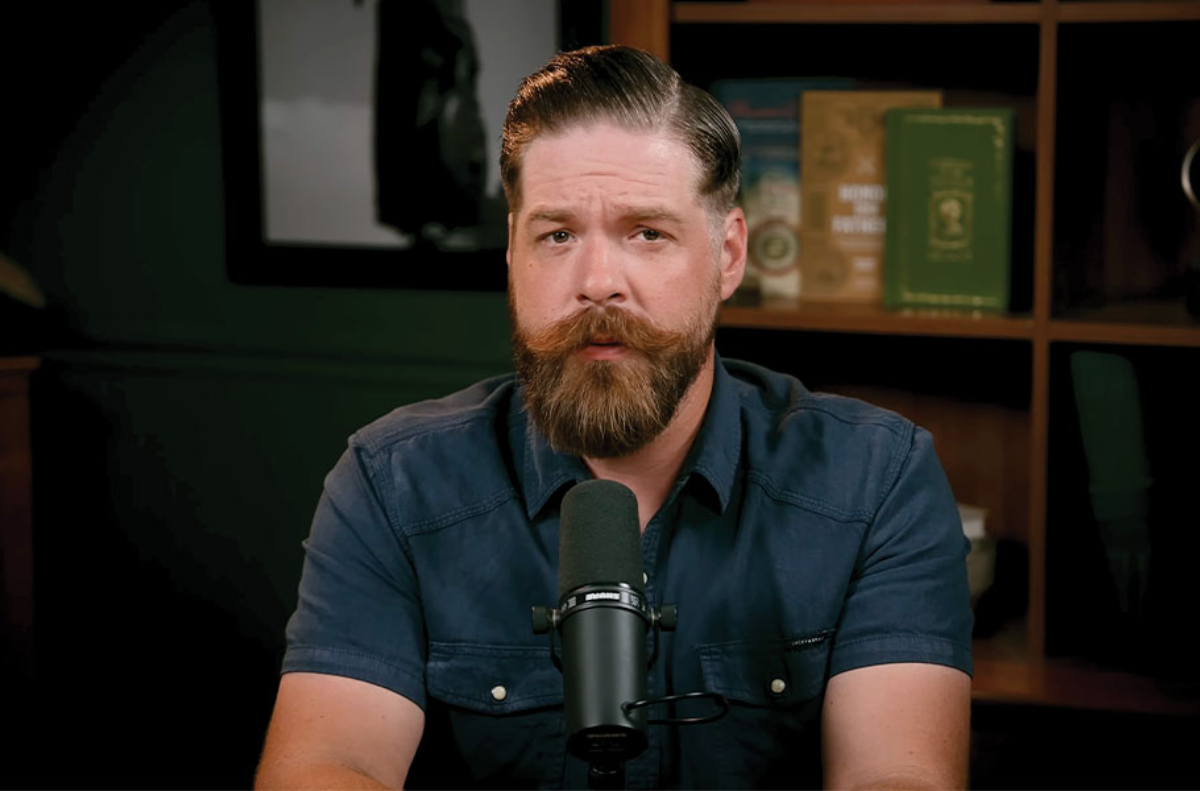
In an episode of “The King’s Hall” podcast in October, Brian Sauvé said:
“Let’s say that somebody was coming into our church and they’re Black…Would they be eligible for membership in our church? Yes, of course they would. They’d be eligible for membership in our church. But would they be permitted to participate in, embody, and practice what I would call black culture generally in our church?The answer is absolutely not. Why? Because the things, the characteristics that mark black culture [are], as a generalization, in the same way Paul’s talking about Cretans on Crete: They are evil, murderous, violent, bestial people; they steal, they kill, they destroy, they look like Satan in how they act, they are sinful to the core, and they have besetting sins that are like fatherlessness, sexual immorality, they molest children at a high rate. Any criminal statistic that you could look at, almost pretty much without exception, they excel at them, black culture… You look at that culture, and you say, “What are the besetting sins and characteristics of it?” And you say, Could somebody come in lawful church membership embodying that culture? No. They would have to self-consciously repudiate that culture.
Most people, especially woke people, call the generalizations about black culture racist. But I don’t think negative generalizations are inherently racist. As a Ghanaian-Canadian, I know there are generally true positive and negative stereotypes about Ghanaians and Canadians.
It’s not always racist to make negative generalizations about a culture, especially when they reveal some truths.
33% of black men have a felony record. That means one out of three black men has a felony record. Also, black people are only 14% of the American population, but we represent almost 60% of the people who commit homicides. Most of this stems from the fact that 75% of black children are raised in fatherless homes.
Statistically, a black man in America is more likely to be a criminal than a faithful father.
It’s not racist to say that. It’s saddening, but it’s the truth.
Instead of addressing these self-inflicted wounds, many black people blame white people and insult black people who tell the truth.
In many cases, it’s more culturally acceptable to be a black criminal than a black conservative.
A black person who murders another black person is not called a race traitor. A black father who abandons his children is not called an Uncle Tom. I am.
That is more offensive than Brian Sauvé’s generalizations about black culture. It’s a careless version of what faithful black pastors like Voddie Baucham have said. When he was asked about his thoughts on so-called systemic racism following the death of Michael Brown by Darren Wilson, he said:
“Rest assured, I do believe there are systemic issues plaguing black men. These issues are violence, criminality, and immorality, to name a few.”
But that doesn’t mean Brian Sauvé and Eric Conn agree with Voddie Baucham. In fact, according to their words, Voddie Baucham would apparently be subject to racial partiality if he hadn’t died and wanted to become a member at their church.
Sauvé’s generalizations about black culture aren’t inherently racist. They could be defended as imperfect and imprecise wording about black culture. The real issue isn’t what he said; it’s why he said it.
The basis for Sauvé’s words about black culture starts and ends with what he would demand from a black individual who wants to become a member at his church.
He suggested that a black person would have to repudiate black culture in order to join his church.
Why should a black Christian be subject to repudiating other people’s sins before they become a member at a church? What does that black individual have to do with “black culture”? How is this any different from Thabiti Anyabwile saying that white people need to repent for Martin Luther King Jr.’s assassination?
Woke pastors like Thabiti Anyabwile imply that white people need to repent from being white, and white nationalists like Brian Sauvé imply that black people need to repent from being black.
It’s not a sin to critique black culture, but it’s a sin to contradict God. Their words contradict what the Bible says in James 2:1-9. They suggested they would show partiality against a black Christian who wants to become a member at their church.
If they wouldn’t ask a white person to denounce white culture, they shouldn’t ask a black person to denounce black culture. The only thing a person needs to repudiate to join a local church is their own sin.
A couple of weeks ago, Brian Sauvé endorsed a “Christian nationalist” website by white nationalist Andrew Torba. According to the website, the best Christian nationalist podcast in the world is the Stone Choir podcast. The host of that website, Corey Mahler, once said that God isn’t able to make black people as godly as white people.
Black people do not need to repent from being black, but “Christian nationalist” pastors like Brian Sauvé should repent from partiality and endorsing blasphemous white nationalists.
EDIT: The original title of this article was “Should Black Christians Repent From Being Black?” I have changed the title to better represent what Brian Sauvé said. I intended for the original title to highlight the implication of Sauvé’s words (which I maintain; I stand by everything in the article), but I understand that it probably gave people who may have read the title but not the words in the article the impression that he literally said, “Black Christians should repent from being black.”
I have sought Sauvé’s forgiveness for that. If I’m going to call my opponents to repent, I must do the same. (Galatians 6:1)